UPCOMING EVENTS

UPCOMING EVENTS

Friday, May 24, 2013

The Trials of Father MacRae

The Wall Street Journal

Updated May 10, 2013, 6:40 p.m. ET

He was convicted when it was obligatory—as it remains today—to give credence to every accuser charging a priest with molestation.

By DOROTHY RABINOWITZ

Last Christmas Eve, his 18th behind bars, Catholic priest Gordon MacRae offered Mass in his cell at the New Hampshire state penitentiary. A quarter-ounce of unfermented wine and the host had been provided for the occasion, celebrated with the priest's cellmate in attendance. Sentenced to 33½-67 years following his 1994 conviction for sexual assault against a teenage male, Father MacRae has just turned 60.

The path that led inexorably to that conviction would have been familiar to witnesses of the manufactured sex-abuse prosecutions that swept the nation in the 1980s and early 1990s and left an extraordinary number of ruined lives in its wake. Here once more, in the MacRae case, was a set of charges built by a determined sex-abuse investigator and an atmosphere in which accusation was, in effect, all the proof required to bring a guilty verdict. But now there was another factor: huge financial payouts for victims' claims.

Related Video


Editorial board member Dorothy Rabinowitz on a priest who was wrongly imprisoned for sexually molesting young boys. Photos: Getty Images


That a great many of the accusations against the priests were amply documented, that they involved the crimes of true predators all too often hidden or ignored, no one can doubt.

Neither should anyone doubt the ripe opportunities there were for fraudulent abuse claims filed in the hope of a large payoff. Busy civil attorneys—working on behalf of clients suddenly alive to the possibilities of a molestation claim, or open to suggestions that they remembered having been molested—could and did reap handsome rewards for themselves and their clients. The Diocese of Manchester, where Father MacRae had served, had by 2004 paid out $22,210,400 in settlements to those who had accused its priests of abuse.

The paydays did not come without effort. Thomas Grover—a man with a long record of violence, theft and drug offenses on whose claims the state built its case against Father MacRae—would receive direction for his testimony at the criminal trial. A conviction at the priest's criminal trial would be a crucial determinant of success—that is, of the potential for reward—in Mr. Grover's planned civil suit.

The 27-year-old accuser found that direction from a counselor at an agency recommended by his civil attorney. During Mr. Grover's testimony, this therapist could be seen (though not by the jury) standing in the back of the courtroom. There, courtroom observers noted, and it is a report the state disputes, she would periodically place her finger at eye level and slowly move it down her right cheek—a pantomime of weeping. Soon thereafter Mr. Grover would begin to cry loudly, and at length.

Thomas Grover's allegations were scarcely more credible than those of the 5- and 6-year-olds coaxed into accusations during the prosecutions of the day-care workers—children who spoke of being molested in graveyards and secret rooms. The accuser's complaints against Father MacRae were similarly rich, among them allegations that few prosecutors would put before a jury. In a pretrial deposition, Mr. Grover alleged that Father MacRae had "chased me through a cemetery" and had tried to corner him there. Also, that Father MacRae had a gun and was "telling me over and over again that he would hurt me, kill me if I tried to tell anybody." The priest had, moreover, chased him down the highway in his car.


Enlarge Image
Associated Press

Gordon MacRae outside the county courthouse in Keene, N.H., after his 1994 conviction.

Though jurors would hear none of these allegations, which spoke volumes about the character of this case, there was still the problem, for the prosecutors, of the spectacular claims Mr. Grover made in court—charges central to the case. Among them, that he had been sexually assaulted by Father MacRae when he was 15 during five successive counseling sessions. Why, after the first horrifying attack, had Mr. Grover willingly returned for four more sessions, in each of which he had been forcibly molested? Because, he explained, he had come to each new meeting with no memory of the previous attack. In addition, Mr. Grover said, he had experienced "out of body" episodes that had blocked his recollection.


In all, not the sort of testimony that would bolster a prosecutor's confidence, and there was more of the kind, replete with the accuser's changing stories. Not to mention a considerable history of forgery, assault, theft and drug use that entered the court record, at least in part, despite the judge's ruling that such facts were irrelevant. In mid-trial, the state was moved to offer Father MacRae an enticing plea deal: one to three years for an admission of guilt. The priest refused it, as he had turned down two previous offers, insisting on his innocence.

Still, the jury trial would end with a conviction in September 1994, and a sentence equivalent to a life term handed down by Judge Arthur Brennan. That would not be all. The state threatened a new prosecution on additional charges unless the priest pleaded guilty to those, in exchange for no added prison time. Without funds and unable to hire a new lawyer, already facing a crushing sentence and certain, given the climate in which he would face a second trial, that he could only be convicted, Father MacRae accepted the deal.

In due course there would be the civil settlement: $195,000 for Mr. Grover and his attorneys. The payday—which the plaintiff had told the court he sought only to meet expenses for therapy—became an occasion for ecstatic celebration by Mr. Grover and friends. The party's high point, captured by photographs now in possession of Father MacRae's lawyers, shows the celebrants dancing around, waving stacks of $50 bills fresh from the bank.

The prospect of financial reward for anyone coming forward with accusations was no secret to teenage males in Keene, N.H., in the early 1990s. Some of them were members of that marginal society, in and out of trouble with the law, it fell to Father MacRae to counsel. Steven Wollschlager, who had been one of them—he would himself serve time for felony robbery—recalled that period of the 1990s in a 2008 statement to Father MacRae's legal team. That it might not be in the best interest of a man with his own past legal troubles to give testimony undermining a high-profile state prosecution did not, apparently, deter him. "All the kids were aware," Mr. Wollschlager recalled, "that the church was giving out large sums of money to keep the allegations from becoming public."

This knowledge, Mr. Wollschlager said, fed the interest of local teens in joining the allegations. It was in this context that Detective James McLaughlin, sex-crimes investigator for the Keene police department, would turn his attention to the priest and play a key role in the effort to build a case against him. The full history of how Father MacRae came to be charged was reported on these pages in "A Priest's Story," April 27-28, 2005.


Mr. Wollschlager recalled that in 1994 Mr. McLaughlin summoned him to a meeting. As a young man, Mr. Wollschlager said, he had received counseling from Father MacRae. The main subject of the meeting with the detective was lawsuits and money and the priest. "All I had to do is make up a story," Mr. Wollschlager said, and he too "could receive a large amount of money." The detective "reminded me of my young child and girlfriend," Mr. Wollschlager attests, and told him "that life would be easier for us."

Eventually lured by the promise, Mr. Wollschlager said, he invented some claims of abuse. But summoned to a grand-jury hearing, he balked, telling an official that he refused to testify. He explains, in his statement, "I could not bring myself to give perjured testimony against MacRae, who had only tried to help me." Asked for response to this charge, Mr. McLaughlin says it is "a fabrication."

Along with the lure of financial settlements, the MacRae case was driven by that other potent force—the fevered atmosphere in which charges were built, the presumption of innocence buried. An atmosphere in which it was unthinkable—it still is today—not to credit as truthful every accuser charging a Catholic priest with molestation. There is no clearer testament to the times than the public statement in September 1993 issued by Father MacRae's own diocese in Manchester well before the trial began: "The Church is a victim of the actions of Gordon MacRae as well as the individuals." Diocesan officials had evidently found it inconvenient to dally while due process took its course.

A New Hampshire superior court will shortly deliver its decision on a habeas corpus petition seeking Father MacRae's immediate release on grounds of newly discovered evidence. The petition was submitted by Robert Rosenthal, an appellate attorney with long experience in cases of this kind. In the event that the petition is rejected, Father MacRae's attorneys say they will appeal.

Those aware of the facts of this case find it hard to imagine that any court today would ignore the perversion of justice it represents. Some who had been witnesses or otherwise involved still maintain vivid memories of the process.

Debra Collett, the former clinical director at Derby Lodge, a rehabilitation center that Mr. Grover had attended in 1987, said in a signed statement for Father MacRae's current legal team that she had been subject to "coercion and intimidation, veiled and more forward threats" during the police investigation because "they could not get me to say what they wanted to hear." Namely, that Mr. Grover had complained to her of molestation by Father MacRae. He had not—though he had accused many others, as she would point out. Thomas Grover, she said, had claimed to have been molested by so many people that the staff wondered whether "he was going for some sexual abuse victim world record."

For Father MacRae's part, he has no difficulty imagining any possibility—fitting for a man with encyclopedic command of the process that has brought him to this pass: every detail, every date, every hard fact. Still after nearly two decades this prisoner of the state remains, against all probability, staunch in spirit, strong in the faith that the wheels of justice turn, however slowly.

Ms. Rabinowitz is a member of the Journal's editorial board.

A version of this article appeared May 11, 2013, on page A13 in the U.S. edition of The Wall Street Journal, with the headline: The Trials of Father MacRae.

Thursday, May 23, 2013

Islam Is Spread With The Sword


May 22, 2013

UK jihad murderer referred to Qur'an's 9th sura, which contains exhortation to kill infidels


In the version of the video containing remarks from the jihad murderer in London today that can be found above, he clearly mentions Surat at-Tawba at the beginning. (Thanks to Kenneth.)

Why has this video been edited to remove his references to the Qur'an?

He says, "Surat at-Tawba through...many, many ayat throughout the Qur'an that...we must fight them as they fight us..."

Surat at-Tawba is the ninth chapter of the Qur'an, and according to Islamic scholars is the last one or one of the last ones to have been revealed that contain doctrinal content -- which means that it takes precedence over the others. Some highlights:

"And when the sacred months have passed, then kill the polytheists wherever you find them and capture them and besiege them and sit in wait for them at every place of ambush. But if they should repent, establish prayer, and give zakah, let them [go] on their way. Indeed, Allah is Forgiving and Merciful." -- 9:5

"Fight them; Allah will punish them by your hands and will disgrace them and give you victory over them and satisfy the breasts of a believing people and remove the fury in the believers' hearts. And Allah turns in forgiveness to whom He wills; and Allah is Knowing and Wise." -- 9:14-15

"Fight those who do not believe in Allah or in the Last Day and who do not consider unlawful what Allah and His Messenger have made unlawful and who do not adopt the religion of truth from those who were given the Scripture - [fight] until they give the jizyah willingly while they are humbled." -- 9:29


"O Prophet, fight against the disbelievers and the hypocrites and be harsh upon them. And their refuge is Hell, and wretched is the destination." -- 9:73


"O you who have believed, fight those adjacent to you of the disbelievers and let them find in you harshness. And know that Allah is with the righteous." -- 9:123


Posted by Robert on May 22, 2013 7:42 PM | 34 Comments
Print | FaceBook | Twitter | Email | Digg this | del.icio.us


Sweden: Police arrest eight as Muslim riots spread to Stockholm


This Bloomberg story is the height of mainstream media politically correct ridiculousness. We are told that the rioters were born between 1991 and 1995, as if that is the salient point to make clear why they are rioting. Nowhere is it mentioned that they are Muslims, although in other stories this has been made clear in other stories that mention the rioters' "spokesman," Rami al-Khamisi. "Swedish Police Arrest Eight as Husby Riots Spread in Stockholm," by Niklas Magnusson and Johan Carlstrom for Bloomberg, May 22 (thanks to Pamela Geller):
Swedish police arrested eight people after riots in Husby spread to other Stockholm suburbs last night as young people set fire to cars and schools and vandalized property.

About 30 cars burned overnight in suburbs including Husby, Jakobsberg, Norsborg and Vaarberg, Kjell Lindgren, a spokesman for the Swedish Police, said by phone today. In Husby, a school and the Husby Gaard cultural center were set on fire while rubbish bins burned across Stockholm’s western and southern suburbs. A school was also set alight in the Skaerholmen suburb, and a police station and buildings in central Jakobsberg were vandalized.

The riots began in Husby on May 19, about a week after a 69-year-old man brandishing a knife was killed by police in an apartment. Sweden, which has Scandinavia’s highest youth unemployment rate, has suffered from riots before. In 2008, young people in Rosengaard in the southern city of Malmoe clashed with police after setting fire to cars and bins. Those riots also spread to the Stockholm suburbs of Tensta and Husby.

“There is a core, as there often is, of young men who believe in using violence and who believe that this use of violence is above our democratic values and above Swedish law,” Prime Minister Fredrik Reinfeldt told reporters in Stockholm yesterday. “The people of Husby must get their suburb back because the majority want to live in calmness and safety.”

The people arrested for vandalism and setting cars on fire were born between 1991 and 1995, police spokesman Lindgren said. The police officers who patrolled the capital city’s suburbs last night “felt the atmosphere was less confrontational than on previous nights,” said Lindgren. Police remain prepared in case of further riots tonight and is probing claims that officers used racist slurs, he said.


Posted by Robert on May 22, 2013 7:23 PM | 8 Comments
Print | FaceBook | Twitter | Email | Digg this | del.icio.us
UK jihad murderer: "There are many, many ayah throughout the Koran that says we must fight them as they fight us"


Watch the video above: he refers to the Qur'an right at the beginning. It is quite clear. It is not surprising at all that the British press would leave out his reference to the Qur'an. "Chilling video of London attacker explaining machete attack on reported soldier," by Max Fisher in the Washington Post, May 22 (thanks to Suneil):
It’s not clear how or why two men attacked a man believed to be a British soldier in the London neighborhood of Woolwich, but U.K. officials are already investigating it as a possible act of terrorism.

A video broadcast by the U.K. network ITV purports to show one of the two attackers explaining himself to a camera immediately after the attack. His hands are covered in blood, a knife and a machete in his right hand. The victim is clearly visible on the ground with a crowd gathering in the background. Here’s what he said:
We swear by Almighty Allah we will never stop fighting you. The only reasons we have done this is because Muslims are dying every day. This British soldier is an eye for an eye a tooth for tooth. We apologise that women had to see this today but in our lands our women have to see the same. You people will never be safe. Remove your government. They don’t care about you.

The Guardian cites eyewitnesses as describing the attack as a “beheading.” The BBC talked to an eyewitness who describes what he saw after arriving in the middle of the attack:
I saw two people lying over him and I thought they were trying to resuscitate him. I went down to the garage and another bloke come along and told me they were actually stabbing him. Apparently they actually ran the car into him and knocked him down before they did anything. And the next minute a silver car came along and a man got out and shouted he was going to phone the police. The next thing that happened was he actually pulled a handgun out. It was a gun that looked as if it could take about 12, 15 rounds so I definitely know it was handgun because I actually seen it in his hand.

The same witness also said that some unarmed police were nearby but did not want to approach the men, who appeared to be armed, until armed “Trojan” police arrived.

The two attackers were shot by police and are currently receiving medical treatment.

Update: The Washington Post’s Anthony Faiola, reporting from London, listened to the ITV video very carefully and came away with a different quote than the one circulating in British media. The first part of the attacker’s quote is difficult to hear because the ITV anchor is speaking over him. It’s not clear to me where the above version, which is cited in The Guardian and elsewhere, first appeared. Here’s the quote as heard by Faiola:
There are many, many ayah throughout the Koran [referring to religious verses] that says we must fight them as they fight us, an eye for an eye and a tooth for a tooth. I apologize that women had to witness this today but in our land women have to see the same. You people will never be safe. Remove your government, they don’t care about you.

Wednesday, May 22, 2013

Diversity, not Jesus, saves says Presiding Bishop

Anglican Ink


MAY 20, 2013 - 2:52PM | 

BY GEORGE CONGER


The Presiding Bishop of the Episcopal Church has denounced the Apostle Paul as mean-spirited and bigoted for having released a slave girl from demonic bondage as reported in Acts 16:16-34 .

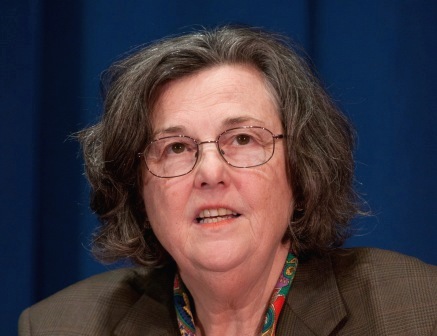
In her sermon delivered at All Saints Church in Curaçao in the diocese of Venezuela, Bishop Katharine Jefferts Schori condemned those who did not share her views as enemies of the Holy Spirit.

The presiding bishop opened her remarks with an observation on the Dutch slave past. “The history of this place tells some tragic stories about the inability of some to see the beauty in other skin colors or the treasure of cultures they didn’t value or understand,” she said.

She continued stating: “Human beings have a long history of discounting and devaluing difference, finding it offensive or even evil. That kind of blindness is what leads to oppression, slavery, and often, war. Yet there remains a holier impulse in human life toward freedom, dignity, and the full flourishing of those who have been kept apart or on the margins of human communities.”

Just as the forces of historical inevitability led to the ending of industrial slavery, so too would the march of progress lead to a change in attitude towards homosexuality, she argued.

“We live with the continuing tension between holier impulses that encourage us to see the image of God in all human beings and the reality that some of us choose not to see that glimpse of the divine, and instead use other people as means to an end. We’re seeing something similar right now in the changing attitudes and laws about same-sex relationships, as many people come to recognize that different is not the same thing as wrong. For many people, it can be difficult to see God at work in the world around us, particularly if God is doing something unexpected.”

To illustrate her point presiding bishop turned to the book of Acts, noting “There are some remarkable examples of that kind of blindness in the readings we heard this morning, and slavery is wrapped up in a lot of it. Paul is annoyed at the slave girl who keeps pursuing him, telling the world that he and his companions are slaves of God. She is quite right. She’s telling the same truth Paul and others claim for themselves,” Bishop Jefferts Schori said, referencing the first chapter of the Epistle to the Romans.

“But Paul is annoyed, perhaps for being put in his place, and he responds by depriving her of her gift of spiritual awareness. Paul can’t abide something he won’t see as beautiful or holy, so he tries to destroy it. It gets him thrown in prison. That’s pretty much where he’s put himself by his own refusal to recognize that she, too, shares in God’s nature, just as much as he does – maybe more so!,” the presiding bishop said.

The New Testament passage goes on to say that Paul and Silas were imprisoned for freeing the girl of her demonic possession. Presiding Bishop noted “an earthquake opens the doors and sets them free, and now Paul and his friends most definitely discern the presence of God. The jailer doesn’t – he thinks his end is at hand.”

However, Paul now repents of his mistake in casting out the spirit of divination, she argues. “This time, Paul remembers who he is and that all his neighbors are reflections of God, and he reaches out to his frightened captor. This time Paul acts with compassion rather than annoyance, and as a result the company of Jesus’ friends expands to include a whole new household. It makes me wonder what would have happened to that slave girl if Paul had seen the spirit of God in her.”

In support her argument for radical inclusion and diversity over doctrine Bishop Jefferts Schori adds that the day’s reading “from Revelation pushes us in the same direction, outward and away from our own self-righteousness, inviting us to look harder for God’s gift and presence all around us. Jesus says he’s looking for everybody, anyone who’s looking for good news, anybody who is thirsty. There are no obstacles or barriers – just come. God is at work everywhere, even if we can’t or won’t see it immediately.”

She concluded her sermon by stating that we are not justified by our faith but by our respect for diversity.

“Looking for the reflection of God’s glory all around us means changing our lenses, or letting the scales on our eyes fall away. That kind of change isn’t easy for anyone, but it’s the only road to the kingdom of God.”

Salvation comes not from being cleansed of our sins by the atoning sacrificial death of Jesus Christ, but through the divinization of humanity through the work of the human will. “We are here, among all the other creatures of God’s creation, to be transformed into the glory intended from the beginning. The next time we feel the pain of that change, perhaps instead of annoyance or angry resentment we might pray for a new pair of glasses. When resentment about difference or change builds up within us, it’s really an invitation to look inward for the wound that cries out for a healing dose of glory. We will find it in the strangeness of our neighbor. Celebrate that difference – for it’s necessary for the healing of this world – and know that the wholeness we so crave lies in recognizing the glory of God’s creative invitation. God among us in human form is the most glorious act we know.”

Responses posted on the Episcopal Church’s website to the Presiding Bishop’s sermon have been uniformly harsh, noting her interpretation was at odds with traditional Christian teaching, grammar, and logic. “This is quite possibly some if the most delusional exegesis I’ve ever read in my life,” one critic charged. “I’m sorry, but this sermon is not a Christian sermon.”

The reception by bloggers has been equally unkind. The Rev Timothy Fountain observed the presiding bishop had up ended the plain meaning of the text. “Instead of liberation” in freeing the slave girl from exploitation, presiding bishop finds “confinement. Instead of Christ’s glory, there’s just squalor.”

The Rev. Bryan Owen argued “What's happening here is the exploitation of a biblical text in service to a theopolitical agenda. Given what she says in the first paragraph I've quoted from her sermon, the Presiding Bishop suggests that anyone who doesn't buy into that agenda - anyone who holds to the traditional, orthodox understanding of such matters - is likewise afflicted with the same narrow-minded bigotry as Paul, and thus in need of enlightenment.”

Tuesday, May 21, 2013

Climate science A sensitive matter

The Economist

The climate may be heating up less in response to greenhouse-gas emissions than was once thought. But that does not mean the problem is going away

Mar 30th 2013 |From the print edition


OVER the past 15 years air temperatures at the Earth’s surface have been flat while greenhouse-gas emissions have continued to soar. The world added roughly 100 billion tonnes of carbon to the atmosphere between 2000 and 2010. That is about a quarter of all the CO₂ put there by humanity since 1750. And yet, as James Hansen, the head of NASA’s Goddard Institute for Space Studies, observes, “the five-year mean global temperature has been flat for a decade.”

Related topics
Environmental problems and protection
Science
Climatology
Climate change
Intergovernmental Panel on Climate Change

Temperatures fluctuate over short periods, but this lack of new warming is a surprise. Ed Hawkins, of the University of Reading, in Britain, points out that surface temperatures since 2005 are already at the low end of the range of projections derived from 20 climate models (see chart 1). If they remain flat, they will fall outside the models’ range within a few years.

The mismatch between rising greenhouse-gas emissions and not-rising temperatures is among the biggest puzzles in climate science just now. It does not mean global warming is a delusion. Flat though they are, temperatures in the first decade of the 21st century remain almost 1°C above their level in the first decade of the 20th. But the puzzle does need explaining.

The mismatch might mean that—for some unexplained reason—there has been a temporary lag between more carbon dioxide and higher temperatures in 2000-10. Or it might be that the 1990s, when temperatures were rising fast, was the anomalous period. Or, as an increasing body of research is suggesting, it may be that the climate is responding to higher concentrations of carbon dioxide in ways that had not been properly understood before. This possibility, if true, could have profound significance both for climate science and for environmental and social policy.

The insensitive planet

The term scientists use to describe the way the climate reacts to changes in carbon-dioxide levels is “climate sensitivity”. This is usually defined as how much hotter the Earth will get for each doubling of CO₂ concentrations. So-called equilibrium sensitivity, the commonest measure, refers to the temperature rise after allowing all feedback mechanisms to work (but without accounting for changes in vegetation and ice sheets).

Carbon dioxide itself absorbs infra-red at a consistent rate. For each doubling of CO₂ levels you get roughly 1°C of warming. A rise in concentrations from preindustrial levels of 280 parts per million (ppm) to 560ppm would thus warm the Earth by 1°C. If that were all there was to worry about, there would, as it were, be nothing to worry about. A 1°C rise could be shrugged off. But things are not that simple, for two reasons. One is that rising CO₂ levels directly influence phenomena such as the amount of water vapour (also a greenhouse gas) and clouds that amplify or diminish the temperature rise. This affects equilibrium sensitivity directly, meaning doubling carbon concentrations would produce more than a 1°C rise in temperature. The second is that other things, such as adding soot and other aerosols to the atmosphere, add to or subtract from the effect of CO₂. All serious climate scientists agree on these two lines of reasoning. But they disagree on the size of the change that is predicted.

The Intergovernmental Panel on Climate Change (IPCC), which embodies the mainstream of climate science, reckons the answer is about 3°C, plus or minus a degree or so. In its most recent assessment (in 2007), it wrote that “the equilibrium climate sensitivity…is likely to be in the range 2°C to 4.5°C with a best estimate of about 3°C and is very unlikely to be less than 1.5°C. Values higher than 4.5°C cannot be excluded.” The IPCC’s next assessment is due in September. A draft version was recently leaked. It gave the same range of likely outcomes and added an upper limit of sensitivity of 6°C to 7°C.

A rise of around 3°C could be extremely damaging. The IPCC’s earlier assessment said such a rise could mean that more areas would be affected by drought; that up to 30% of species could be at greater risk of extinction; that most corals would face significant biodiversity losses; and that there would be likely increases of intense tropical cyclones and much higher sea levels.

New Model Army

Other recent studies, though, paint a different picture. An unpublished report by the Research Council of Norway, a government-funded body, which was compiled by a team led by Terje Berntsen of the University of Oslo, uses a different method from the IPCC’s. It concludes there is a 90% probability that doubling CO₂ emissions will increase temperatures by only 1.2-2.9°C, with the most likely figure being 1.9°C. The top of the study’s range is well below the IPCC’s upper estimates of likely sensitivity.

This study has not been peer-reviewed; it may be unreliable. But its projections are not unique. Work by Julia Hargreaves of the Research Institute for Global Change in Yokohama, which was published in 2012, suggests a 90% chance of the actual change being in the range of 0.5-4.0°C, with a mean of 2.3°C. This is based on the way the climate behaved about 20,000 years ago, at the peak of the last ice age, a period when carbon-dioxide concentrations leapt. Nic Lewis, an independent climate scientist, got an even lower range in a study accepted for publication: 1.0-3.0°C, with a mean of 1.6°C. His calculations reanalysed work cited by the IPCC and took account of more recent temperature data. In all these calculations, the chances of climate sensitivity above 4.5°C become vanishingly small.

If such estimates were right, they would require revisions to the science of climate change and, possibly, to public policies. If, as conventional wisdom has it, global temperatures could rise by 3°C or more in response to a doubling of emissions, then the correct response would be the one to which most of the world pays lip service: rein in the warming and the greenhouse gases causing it. This is called “mitigation”, in the jargon. Moreover, if there were an outside possibility of something catastrophic, such as a 6°C rise, that could justify drastic interventions. This would be similar to taking out disaster insurance. It may seem an unnecessary expense when you are forking out for the premiums, but when you need it, you really need it. Many economists, including William Nordhaus of Yale University, have made this case.

If, however, temperatures are likely to rise by only 2°C in response to a doubling of carbon emissions (and if the likelihood of a 6°C increase is trivial), the calculation might change. Perhaps the world should seek to adjust to (rather than stop) the greenhouse-gas splurge. There is no point buying earthquake insurance if you do not live in an earthquake zone. In this case more adaptation rather than more mitigation might be the right policy at the margin. But that would be good advice only if these new estimates really were more reliable than the old ones. And different results come from different models.

One type of model—general-circulation models, or GCMs—use a bottom-up approach. These divide the Earth and its atmosphere into a grid which generates an enormous number of calculations in order to imitate the climate system and the multiple influences upon it. The advantage of such complex models is that they are extremely detailed. Their disadvantage is that they do not respond to new temperature readings. They simulate the way the climate works over the long run, without taking account of what current observations are. Their sensitivity is based upon how accurately they describe the processes and feedbacks in the climate system.


The other type—energy-balance models—are simpler. They are top-down, treating the Earth as a single unit or as two hemispheres, and representing the whole climate with a few equations reflecting things such as changes in greenhouse gases, volcanic aerosols and global temperatures. Such models do not try to describe the complexities of the climate. That is a drawback. But they have an advantage, too: unlike the GCMs, they explicitly use temperature data to estimate the sensitivity of the climate system, so they respond to actual climate observations.

The IPCC’s estimates of climate sensitivity are based partly on GCMs. Because these reflect scientists’ understanding of how the climate works, and that understanding has not changed much, the models have not changed either and do not reflect the recent hiatus in rising temperatures. In contrast, the Norwegian study was based on an energy-balance model. So were earlier influential ones by Reto Knutti of the Institute for Atmospheric and Climate Science in Zurich; by Piers Forster of the University of Leeds and Jonathan Gregory of the University of Reading; by Natalia Andronova and Michael Schlesinger, both of the University of Illinois; and by Magne Aldrin of the Norwegian Computing Centre (who is also a co-author of the new Norwegian study). All these found lower climate sensitivities. The paper by Drs Forster and Gregory found a central estimate of 1.6°C for equilibrium sensitivity, with a 95% likelihood of a 1.0-4.1°C range. That by Dr Aldrin and others found a 90% likelihood of a 1.2-3.5°C range.

It might seem obvious that energy-balance models are better: do they not fit what is actually happening? Yes, but that is not the whole story. Myles Allen of Oxford University points out that energy-balance models are better at representing simple and direct climate feedback mechanisms than indirect and dynamic ones. Most greenhouse gases are straightforward: they warm the climate. The direct impact of volcanoes is also straightforward: they cool it by reflecting sunlight back. But volcanoes also change circulation patterns in the atmosphere, which can then warm the climate indirectly, partially offsetting the direct cooling. Simple energy-balance models cannot capture this indirect feedback. So they may exaggerate volcanic cooling.

This means that if, for some reason, there were factors that temporarily muffled the impact of greenhouse-gas emissions on global temperatures, the simple energy-balance models might not pick them up. They will be too responsive to passing slowdowns. In short, the different sorts of climate model measure somewhat different things.

Clouds of uncertainty

This also means the case for saying the climate is less sensitive to CO₂ emissions than previously believed cannot rest on models alone. There must be other explanations—and, as it happens, there are: individual climatic influences and feedback loops that amplify (and sometimes moderate) climate change.

Begin with aerosols, such as those from sulphates. These stop the atmosphere from warming by reflecting sunlight. Some heat it, too. But on balance aerosols offset the warming impact of carbon dioxide and other greenhouse gases. Most climate models reckon that aerosols cool the atmosphere by about 0.3-0.5°C. If that underestimated aerosols’ effects, perhaps it might explain the lack of recent warming.

Yet it does not. In fact, it may actually be an overestimate. Over the past few years, measurements of aerosols have improved enormously. Detailed data from satellites and balloons suggest their cooling effect is lower (and their warming greater, where that occurs). The leaked assessment from the IPCC (which is still subject to review and revision) suggested that aerosols’ estimated radiative “forcing”—their warming or cooling effect—had changed from minus 1.2 watts per square metre of the Earth’s surface in the 2007 assessment to minus 0.7W/m ² now: ie, less cooling.

One of the commonest and most important aerosols is soot (also known as black carbon). This warms the atmosphere because it absorbs sunlight, as black things do. The most detailed study of soot was published in January and also found more net warming than had previously been thought. It reckoned black carbon had a direct warming effect of around 1.1W/m ². Though indirect effects offset some of this, the effect is still greater than an earlier estimate by the United Nations Environment Programme of 0.3-0.6W/m ².

All this makes the recent period of flat temperatures even more puzzling. If aerosols are not cooling the Earth as much as was thought, then global warming ought to be gathering pace. But it is not. Something must be reining it back. One candidate is lower climate sensitivity.

A related possibility is that general-circulation climate models may be overestimating the impact of clouds (which are themselves influenced by aerosols). In all such models, clouds amplify global warming, sometimes by a lot. But as the leaked IPCC assessment says, “the cloud feedback remains the most uncertain radiative feedback in climate models.” It is even possible that some clouds may dampen, not amplify global warming—which may also help explain the hiatus in rising temperatures. If clouds have less of an effect, climate sensitivity would be lower.


So the explanation may lie in the air—but then again it may not. Perhaps it lies in the oceans. But here, too, facts get in the way. Over the past decade the long-term rise in surface seawater temperatures seems to have stalled (see chart 2), which suggests that the oceans are not absorbing as much heat from the atmosphere.

As with aerosols, this conclusion is based on better data from new measuring devices. But it applies only to the upper 700 metres of the sea. What is going on below that—particularly at depths of 2km or more—is obscure. A study in Geophysical Research Letters by Kevin Trenberth of America’s National Centre for Atmospheric Research and others found that 30% of the ocean warming in the past decade has occurred in the deep ocean (below 700 metres). The study says a substantial amount of global warming is going into the oceans, and the deep oceans are heating up in an unprecedented way. If so, that would also help explain the temperature hiatus.

Double-A minus

Lastly, there is some evidence that the natural (ie, non-man-made) variability of temperatures may be somewhat greater than the IPCC has thought. A recent paper by Ka-Kit Tung and Jiansong Zhou in the Proceedings of the National Academy of Sciences links temperature changes from 1750 to natural changes (such as sea temperatures in the Atlantic Ocean) and suggests that “the anthropogenic global-warming trends might have been overestimated by a factor of two in the second half of the 20th century.” It is possible, therefore, that both the rise in temperatures in the 1990s and the flattening in the 2000s have been caused in part by natural variability.

So what does all this amount to? The scientists are cautious about interpreting their findings. As Dr Knutti puts it, “the bottom line is that there are several lines of evidence, where the observed trends are pushing down, whereas the models are pushing up, so my personal view is that the overall assessment hasn’t changed much.”

But given the hiatus in warming and all the new evidence, a small reduction in estimates of climate sensitivity would seem to be justified: a downwards nudge on various best estimates from 3°C to 2.5°C, perhaps; a lower ceiling (around 4.5°C), certainly. If climate scientists were credit-rating agencies, climate sensitivity would be on negative watch. But it would not yet be downgraded.

Equilibrium climate sensitivity is a benchmark in climate science. But it is a very specific measure. It attempts to describe what would happen to the climate once all the feedback mechanisms have worked through; equilibrium in this sense takes centuries—too long for most policymakers. As Gerard Roe of the University of Washington argues, even if climate sensitivity were as high as the IPCC suggests, its effects would be minuscule under any plausible discount rate because it operates over such long periods. So it is one thing to ask how climate sensitivity might be changing; a different question is to ask what the policy consequences might be.

For that, a more useful measure is the transient climate response (TCR), the temperature you reach after doubling CO₂ gradually over 70 years. Unlike the equilibrium response, the transient one can be observed directly; there is much less controversy about it. Most estimates put the TCR at about 1.5°C, with a range of 1-2°C. Isaac Held of America’s National Oceanic and Atmospheric Administration recently calculated his “personal best estimate” for the TCR: 1.4°C, reflecting the new estimates for aerosols and natural variability.


That sounds reassuring: the TCR is below estimates for equilibrium climate sensitivity. But the TCR captures only some of the warming that those 70 years of emissions would eventually generate because carbon dioxide stays in the atmosphere for much longer.

As a rule of thumb, global temperatures rise by about 1.5°C for each trillion tonnes of carbon put into the atmosphere. The world has pumped out half a trillion tonnes of carbon since 1750, and temperatures have risen by 0.8°C. At current rates, the next half-trillion tonnes will be emitted by 2045; the one after that before 2080.

Since CO₂ accumulates in the atmosphere, this could increase temperatures compared with pre-industrial levels by around 2°C even with a lower sensitivity and perhaps nearer to 4°C at the top end of the estimates. Despite all the work on sensitivity, no one really knows how the climate would react if temperatures rose by as much as 4°C. Hardly reassuring.

From the print edition: Science and technology

Monday, May 20, 2013

A Cardinal Boycotts Boston College

The Wall Street Journal


May 16, 2013, 7:10 p.m. ET

Ignoring U.S. bishops, the Catholic university will honor an abortion-rights supporter on Monday.


By ANNE HENDERSHOTT

At Boston College's commencement ceremony on Monday, Cardinal Sean O'Malley won't be in attendance. The leader of the Boston archdiocese announced on May 10 that he would not deliver his traditional graduation benediction at the Catholic school because the college had invited Irish Prime Minister Enda Kenny—a supporter of abortion rights in Ireland—to deliver the graduation address and receive an honorary degree.

The cardinal said the invitation has caused "confusion, disappointment and harm" by ignoring the U.S. bishops "who have asked that Catholic institutions not honor government officials or politicians who promote abortion with their laws and policies."

In April, Mr. Kenny's coalition government introduced legislation with the curious title "The Protection of Life During Pregnancy Bill 2013." It will allow access to direct abortion for pregnant women if they claim to be so distraught about the pregnancy that they are in danger of committing suicide. Mr. Kenny has said that he "would like to see the legislation enacted before the Dail [parliament] rises for the summer."

The prime minister's actions have been condemned by the Catholic bishops of Ireland, who released a statement that warned: "International experience shows that allowing abortion on the grounds of mental health effectively opens the floodgates for abortion . . . it is the unborn child's common humanity that makes his life equal in value to that of the mother."

Boston College has responded to criticism of its invitation to Mr. Kenny—from Cardinal O'Malley, a pro-life student group at Boston College, and the Catholic Action League of Massachusetts, among others—by saying that the decision was about common culture, not legislation. On May 10, college spokesman Jack Dunn told the Boston Globe that the invitation was extended "in light of our long-standing connection with Ireland and our desire to recognize and celebrate our heritage," and was made "independent of the proposed bill that will be debated in the Irish parliament this summer."

The abortion bill is just Mr. Kenny's most recent clash with the Catholic Church. Last year, for instance, his government promoted a bill which would impose criminal penalties, including imprisonment, on priests who refuse to violate the seal of the confessional—normally sacrosanct—in cases of sexual abuse. On July 20, 2011, Mr. Kenny told the Irish parliament that the Vatican, in a bid to preserve its power, has "downplayed" the "rape and torture of children." Later that year, he closed the Irish embassy to the Holy See, citing economic reasons.

Ireland's prime minister isn't the first abortion-rights proponent to be honored by the college. In 2010, the pro-choice Republican senator from Massachusetts, Scott Brown, delivered the commencement address at the Boston College School of Law. In 2007, the law school invited Edward Markey—a Massachusetts Congressman with a 100% abortion rights voting record in Congress—to speak at its commencement. In 2006, Mr. Markey joined 54 other Catholic Democrats in the House in signing a "Catholic Statement of Principles," reserving the right to disagree with the Catholic Church on important issues like abortion. Mr. Markey is now running for John Kerry's vacated Senate seat.

There has been an uneasy relationship between the church and the wider Boston College campus community as well. In 2009, when college administrators placed 40 crucifixes on classroom walls throughout the Boston campus, a number of faculty members were furious.

In interviews with the Boston Herald and InsideHigherED.com, one professor described the display of crucifixes as offensive, while another found it "insensitive" and "indicative of a bias toward one way of thinking, elevating one set of ideals above others, honoring one group of people in preference to the rest." Complaining about the crucifixes, Boston College Chemistry professor Amir Hoyveda wrote a letter to the editor of the Boston Herald, saying that he could "hardly imagine a more effective way to denigrate the faculty of an educational institution."

Boston College pro-choice law students have formed BC Law Students for Reproductive Justice. On their website as of May 16, the Boston College pro-choice law students vow to "promote awareness of reproductive issues in order "to ensure that future lawyers will be prepared to successfully defend and expand reproductive rights."

In a sense the professors and students are continuing the tradition of the longtime proponent of abortion rights, the late Rev. Robert Drinan, who was dean of Boston College Law School for 14 years (1956-70) before serving in the U.S. House of Representatives. While a congressman, Drinan could be counted on to vote for increased access to abortion, just as earlier, while a dean, he had helped counsel Catholic politicians on how to accept and promote abortion with a clear conscience. In 2011, the Boston College Law School held a symposium to honor Drinan.

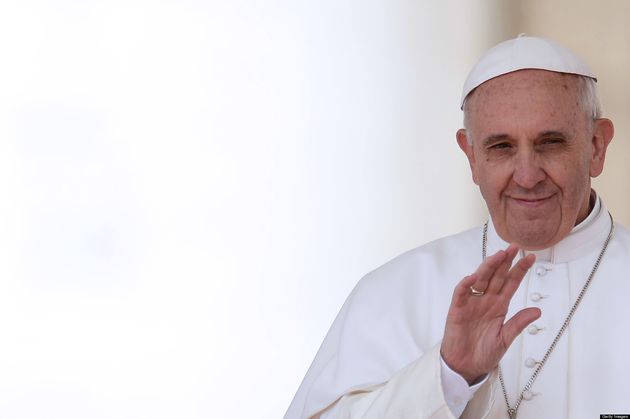
Yet Cardinal O'Malley's refusal to countenance the college's support for Prime Minister Kenny may be a sign that things are about to change. In April, Pope Francis chose Cardinal O'Malley as one of eight cardinals to advise him on running the church and reforming the Vatican bureaucracy.

This honor brings with it a responsibility to ensure that Catholic colleges and universities are faithful to the Catholic mission. The cardinal's Boston College boycott is a good start.


Ms. Hendershott is a sociology professor at Franciscan University of Steubenville in Ohio, and the co-author of "Renewal: How a New Generation of Priests and Bishops are Revitalizing the Catholic Church," forthcoming from Encounter Books.

Sunday, May 19, 2013

The Rise, Fall and Future of Catholicism in the U.S.

Catholic World Report

May 10, 2013

An interview with Russell Shaw, author of American Church.

CWR Staff


Left: Cardinal James Gibbons (1834-1921), Archbishop of Baltimore. Right: Orestes Augustus Brownson (1803–1876).

Author and journalist Russell Shaw has written over twenty books, including To Hunt, To Shoot, To Entertain: Clericalism and the Catholic Laity and Nothing to Hide: Secrecy, Communication, and Communion in the Catholic Church. For 18 years, Shaw directed media relations for the National Conference of Catholic Bishops and the United States Catholic Conference. From 1987 to 1997 he oversaw media relations for the Knights of Columbus. Since resigning from that position, he has worked full time as a freelance writer. His most recent book, American Church: The Remarkable Rise, Meteoric Fall, and Uncertain Future of Catholicism in America (Ignatius Press, 2013), has been widely praised as an incisive examination of the recent history of the Catholic Church in the United States. “If you want to understand the Church in the United States and the challenges she now faces,” states Abp. Charles J. Chaput, O.F.M. Cap., Archbishop of Philadelphia, “American Church should be on the short list of books you need to read.” Shaw recently answered some questions from CWR about his book and the past, present, and future of Catholicism in the United States.


CWR: How and why was James Cardinal Gibbons of Baltimore such a key figure in the story of the Catholic Church in the U.S.?

Shaw: Cardinal Gibbons was Archbishop of Baltimore from 1877 until his death in 1921. That's 44 crucial years in American Catholic history during which he was the leader of the American hierarchy, recognized as such by Rome and by his episcopal colleagues. He also was leader of the Americanizing bishops—the members of the hierarchy who advocated rapid and total integration of immigrant Catholics into American culture.

The group included some who were more flamboyant, like Archbishop John Ireland of Saint Paul, and others who were more intellectual, like Bishop John Lancaster Spalding of Peoria, but the patient, prudent, diplomatic Gibbons was the most effective of them all, trusted by the Holy See and widely respected at home. By the time of his death, he was one of the most admired public figures in the country, and his policy of Americanization was the policy of the Church in the United States. I have no hesitation saying his impact on American Catholicism was greater than that of any bishop before or since..

CWR: You describe Orestes Brownson as "the most distinguished (and very nearly only) American Catholic public intellectual of his day." How did Brownson's view of the relationship between Catholicism and the American experiment change or develop? How accurate was his mostly negative assessment of that relationship?

Shaw: Brownson, who lived from 1803 to 1876, was a self-taught genius and convert to Catholicism as well as a prominent writer and social critic. He also was a friend and colleague of Father Isaac Hecker, another convert, who founded the Paulist Fathers, and for a time shared Hecker's dream of Catholic integration into American culture in order to evangelize and ultimately convert Protestant America.

Over time, though, Brownson soured on the Hecker project and came to see it as a terrible mistake. He and Hecker set out their views in a remarkable exchange of correspondence in 1870 that I include in my book. Brownson's position was that there was something fundamental to the American character—we'd call it individualism today—that made it not merely inhospitable but dangerous to Catholicism. Let me quote: "Catholics as well as others imbibe the spirit of the country, imbibe from infancy the spirit of independence, freedom from all restraint, unbounded license….I think the Church has never encountered a social & political order so hostile to her."

Was Brownson right? For a long time, you'd have had to say no. But ever since the 1960s it's begun to look as if he was onto something—something Catholics need to take very seriously now.

CWR: What were the essential points of contention between Brownson and Hecker? What insights into the situation today can be gleaned from their argument?

Shaw: The differences boil down to three things. First, whether Catholicism and American secular culture were or weren't compatible. Hecker said yes, Brownson said no. Second, whether there was a real possibility of converting American Protestants as a group to Catholicism. Again, it was Hecker yes and Brownson no. And third, whether the Catholic Church did or didn't have a congenial home in the United States. Same thing again—Hecker yes, Brownson no.

These three questions remain central to any serious attempt to evaluate the current situation and future prospects of Catholicism in America today.

CWR: You point to the year 1950 and the novel The Cardinal when gauging the high water mark of Catholic influence and success. What are some reasons for doing so?

Shaw: Quite simply, everything was coming up roses for American Catholicism around 1950. Priestly and religious vocations were booming, Catholic schools were overflowing, the whole Catholic enterprise was dynamic and growing. Suddenly it was downright fashionable to be Catholic. A couple of years earlier, the influential Protestant magazineChristian Century ran a series with the title, "Can Catholicism Win America?" Its answer: yes. And many Catholics agreed.

The Cardinal captures the Catholic mood of that time exceptionally well. Henry Morton Robinson's page-turner was a hugely successful bestseller in its day. It's a fictionalized, romanticized version of the career of Cardinal Spellman of New York whose triumphalistic message is that Catholics had come into their own just in time—in the early years of the cold war, that is—to save the nation and indeed all Christendom from the threat of atheistic communism. Catholics ate it up because it expressed their own self-image, as well as their aspirations and anxieties, with remarkable insight.

CWR: It seems that a substantial number of Catholics today believe that the Church in the U.S. prior to the Council was one of two extremes: an insulated, reactionary ghetto that was closing in on itself, or a robust, faithful communion of believers that was largely successful in living the faith in a mainly Protestant nation. How much truth is there to either of these presentations of the Church in 1950s?

Shaw: There's a certain amount of truth in both. But Catholicism of that era was in fact rapidly shedding its ghetto status and bursting out into the larger culture. Summing up, the historian Charles Morris concludes that Catholicism in the 1950s was well on its way to becoming "the dominant cultural institution in the country." Some ghetto! If only we could have combined the real strength of American Catholicism then with a successful implementation of the reforms of Vatican II, who knows how bright the future might have been? Alas, that's hardly what happened.

CWR: What is the "Americanization of American Catholicism"? What have been its fruits over the past few decades?

Shaw: The expression refers to the process of cultural assimilation by which American Catholics entered the mainstream of American secular culture, became part of it, and bought into many of its values and attitudes. On the plus side, the result has been acceptance, upward socio-economic mobility, and much professional and material success.

But it has come at a high price. Buying into American secular values has time and again meant buying into a toxic value system in radical conflict with Catholic and Christian convictions on many fronts. And that has meant an ongoing loss of religious identity and commitment to the Church on the part of millions of nominal Catholics—to say nothing of the 22 million ex-Catholics in the United States.

CWR: How did John F. Kennedy's 1960 speech in Houston, given to a group of Protestant ministers, further the privatizing of religion and shape the approach taken to belief and the public square by other Catholic politicians?

Shaw: In September 1960 Kennedy was facing an upsurge of anti-Catholicism that threatened his chances of winning the White House. That famous speech was his answer. He assured his audience of ministers that if he were elected president, he wouldn't let Catholic faith and values get in the way of doing what the job required. It was effective—after all, he won.

But in winning Kennedy paved the way for Catholic politicians like Mario Cuomo and Ted Kennedy and many others who came to handle the abortion issue by saying they were "personally opposed” but wouldn't dream of imposing their views. Now we've reached the point where many prominent political Catholics don't even bother with "personally opposed" on things like abortion and gay marriage—they just support them and shrug their shoulders at the Church's opposition. Things would be very different today if Kennedy and his successors had stood with the Church instead of throwing in the towel. That would have been a real profile in courage.

CWR: In what ways was the year 1976 "the all-time low point" for the Church in America up to now?

Shaw: You could cite quite a few ways—and I do in my book. Let me cite mention just two.

One was the bishops' involvement in the Ford-Carter presidential campaign and the reaction this touched off. Remember, this was soon after the Supreme Court decision inRoe v. Wade, and the bishops were actively seeking a constitutional amendment to restore protection to the unborn.

Under the leadership of Archbishop Bernardin, then president of the bishops' conference, a delegation of bishops met with Jimmy Carter and pressed him on the issue. After the meeting, the Archbishop said the bishops were "disappointed" by Carter's refusal to support an amendment. A couple of weeks later, the same group of bishops met with President Ford, and Archbishop Bernardin told the White House press corps they were "encouraged" by Ford's willingness to support some sort of amendment. This ignited a huge firestorm of criticism and a lot of backstage maneuvering within the Church. The administrative committee of the bishops' conference met in mid-September and insisted that Archbishop Bernardin back down—which he did in an extremely painful press conference. It was a huge setback to the bishops' prolife effort and open evidence of the serious divisions in their ranks.

October brought the Call To Action Conference in Detroit. The planners at the bishops' conference intended this as the centerpiece of the American Catholic contribution to U.S. Bicentennial of 1976. It turned out to be an overpublicized forum for Catholic dissent.

Once again the bishops were embarrassed, furious, and split. That's the kind of year it was.

CWR: What are some of the basic things that must be done so that a healthy, vibrant culture—or subculture, as you describe it—be created, supported, and nourished?

Shaw: You can't just decide to create a subculture and then go ahead and do it. It's something that has to grow spontaneously out of people's lived experience. But you can create what social scientists call a “plausibility structure”—a network of institutions, organizations, and programs embodying the shared values of a particular group. A successful plausibility structure is the backbone of a healthy subculture. That's what the Church urgently needs today to build up and sustain the religious identity of American Catholics.

In fact, it's been happening for some years. You can see it in the emergence of new, proudly orthodox Catholic colleges and universities and the revival of Catholic identity in some existing ones, in new media ventures of all sorts, in new movements and groups committed to a strong, orthodox idea of what it means to be Catholic.

It's extremely important, though, that this new plausibility structure not adopt a defensive, insular mentality—not be an exercise in circling the wagons against a hostile secular culture. Yes, the secular culture is largely hostile to the faith of Catholics. But instead of fleeing secular America in reaction against it, well-formed, highly motivated Catholics must undertake a serious program for its evangelization.

This new subculture should be a school of Catholic identity and an agent for the formation of Catholics as evangelizers. That's a large order, and time is short. But the future of the Church in the United States depends on it.


• Editor's note: Also see, "Accommodation and Americanism, Yesterday and Today", an essay by historian Kevin Schmiesing on Shaw’s book.

Saturday, May 18, 2013

The Nuns Not on the Bus

Religion & Politics


By Mark Oppenheimer | October 26, 2012


(AP Photo/John Russell)

Last April, the Vatican issued an 8-page document addressed to the Leadership Conference of Women Religious, the major association of American nuns. The “doctrinal assessment” accused the nuns of “radical feminism,” of agitating for women’s ordination, and of remaining silent in “the lively public debate about abortion and euthanasia in the United States.” As a remedy, the Vatican ordered a five-year rehabilitation, during which the nuns would be supervised by a committee of three bishops. The nuns were not well pleased; they fought back. In June, five nuns from Network, a progressive Catholic lobby criticized in the Vatican assessment, launched the “Nuns on the Bus” tour, traveling through nine states from Iowa to Washington, D.C. The nuns attended Masses, held press conferences, and protested at the offices of conservative congressmen, like John Boehner; all the while they attacked the Paul Ryan budget for hurting struggling Americans. Their leader, Simone Campbell, spoke at the Democratic National Convention in August. In September, they gathered two hundred sisters to ride the Staten Island Ferry for a “Nuns on a Ferry” rally. They are currently organizing protest bus tours around the country, from Missouri to Ohio.

The Vatican, under the current conservative pope, is not irrational to fear these nuns and their progressive ways. Among its many reforms, the Second Vatican Council, which ran from 1962 to 1965 and celebrates its 50th anniversary this month, gave more autonomy to nuns. After it ended, many nuns doffed their habits and resumed their given names. They developed activist ministries, focused on war or poverty. Today, many nuns are feminists who prefer Catholic teaching on social justice to its teaching about sexual morality; they spend less time in communal prayer and more in the neighborhood.

If the stereotypical nun was once the parochial-school teacher in a wimple, today it might be the elderly woman in a well-worn sweater, running a job-training program and reading liberal theology at night. They have moved far to the left of the male Catholic hierarchy in Rome. Their disloyalty is not imaginary, not entirely.

But this fight is about more than the Leadership Conference of Women Religious. About 20 percent of American nuns belong to a rival organization, the Council of Major Superiors of Women Religious, which split off in 1992. These sisters still wear habits, and many take new names in the convent. They are more loyal to the church hierarchy. In general, they are more interested in stopping abortion than in bringing the troops home from Afghanistan, and they worry more about Obamacare’s health insurance mandate than about the Ryan budget’s cuts to Medicaid.

The conservative convents are not getting more new members than their liberal counterparts: each wing of American sisterhood counts about 500 women in the multi-year process of becoming nuns. But sisters joining liberal convents are much older, often second-career types, sometimes with a marriage and children in their past. By contrast, a majority of women joining convents in the conservative splinter group are in their twenties. Some traditionalist convents are getting ten or twenty new postulants (first-year nuns) a year. And this is significant: In 2010, there were only 56,000 nuns in the United States, less than a third of their 1965 total. The average age of nuns is rising quickly, and many convents are becoming nursing homes for their members.

The small renaissance of American nuns is occurring among sisters who look like nuns from 1960 and, in their deference to the church, act like nuns from 1960. That model is compelling to a young generation of devout women who are more interested in purity than in the messy intellectual complexity, and frequent dissent, that their elders embraced. The Vatican is doubling down on this old-fashioned model of sisterhood—no matter the offense taken by thousands of older nuns who have spent their lives poor, single and childless, all for love of God, if not always the church.


FIFTY YEARS AGO, the Dominican Sisters of St. Cecilia, based in Nashville, was lucky to get four or five postulants a year. But in the past 20 years its population has doubled, from 145 sisters in 1990 to 284 sisters today. And the newbies are overwhelmingly young: this summer, 21 postulants entered the community, ranging in age from 19 to 32.

In July, I visited this congregation, which belongs to the conservative Conference of Major Superiors of Women Religious. I was met at the airport by two young women in white robes and black veils, standing beside a sedan in the short-term parking area. I got in beside Sister Anna, and our conversation, which began on the drive back, continued in a stately sitting room at the convent, where we drank iced tea as Pope Benedict XVI looked down from the wall. Sister Anna was 32 years old and grew up in the wealthy New York suburb of New Canaan, Connecticut. She was fair, with a few blond hairs escaping her veil. She looked like about six girls from my prep school’s lacrosse team. I asked why she became a nun.

“I went to public school, so I wasn’t taught by nuns,” Sister Anna said. “I was raised Catholic, but I wasn’t by any definition zealous. I was raised as a cultural Catholic.” After graduating from New Canaan High School, Andrea Wray — as she was then known — attended Catholic University, in Washington, D.C. There, she happened one day upon a Dominican friar in his robes. “I followed him to ask who are you and why are you wearing that.” They talked, and she began attending Mass at the Dominican House near campus. Under the Dominicans’ tutelage, she got the instruction in doctrine and piety missing from her childhood Catholicism. “It was the Lord giving me what I needed when I was ready to receive it,” she said. “I would have spit it back as an adolescent.”

As a collegian, Wray drank it down. The Dominican monks directed her to the Dominican Sisters of St. Cecilia, a teaching congregation that sends sisters to work in 34 primary and secondary schools, from Nashville to Australia. It felt right. Immediately after graduation, in 2002, she moved to Nashville to become a postulant.

Sister Anna had recently finished three years teaching at a nearby Dominican high school, per the decision of her superior, and she was about to return to Catholic University to finish a master’s degree — also per her superior’s orders. She may visit her family only once a year; they stay in touch by mail. She and the other sisters eat breakfast and dinner in silence, although one sister reads to the rest: sometimes the Vatican newspaper, often a biography of St. Dominic. Sister Anna is chatty and gregarious, very not-contemplative-seeming — she would be the captain of that lacrosse team — but she insists that all this structure liberates her.

“When we talk about sacrifices, we are talking about things that make us more free,” Sister Anna said. “We are not radically independent,” she said. “We’re not 280 women who happen to be living together. We live a common life. As the world becomes more and more focused on the individual, on self-sufficiency, on being an expert in your own field, that can bring down a community.” The Dominicans make a countercultural statement: against individualism, against modernity.

Afterward, Sister Catherine Marie, who was the vocation director from 1990 to 2005, and so oversaw the congregation’s boom, gave me a tour of the Motherhouse, or convent, a large 1862 brick building that originally operated as a boarding school for girls. “There’s no recruiting,” Sister Catherine Marie told me. Curious women, including many college students, stay with the Dominicans for short retreats; otherwise, the sisters’ outreach is just existing, publicly. “It’s about being visible and available,” she said. “We usually get two master’s degrees, one in theology and one in the field of education. So we have a lot of contact with young people.”

After a sit-down lunch with three sisters, 32 women filed into our small private dining room, in the basement. Nineteen were novices and thirteen wore the garb of postulants. One had a guitar, another had a violin. They introduced themselves by name and hometown: Cincinnati, Oklahoma City, Melbourne. Then they sang two songs: an original composition they had written about St. Cecilia, and “Prodigal Son,” by country star and Nashville resident Dirks Bentley. They were as exuberant as a collegiate a cappella group, if not quite as tuneful.

After lunch I sat in a living room and talked with about a dozen young sisters. They resisted my insinuation that they cared only about the church’s “conservative” positions. “If you don’t care about the dignity of the human person, it makes no sense to talk about education or war in Iraq,” said Sister Hannah, an African-American woman who majored in philosophy at Notre Dame. “So pro-life is foundational that way. But we do care about other issues.”

They got animated when I asked about the habit. “At the hospital, I can’t tell you how many times I’ve been approached,” said Sister Catherine Marie. “A woman once asked me, ‘My mother just died. Will you pray over her body?’ They unzipped the body bag right there. If I weren’t wearing the habit, that wouldn’t happen.”

But what of their cloistered existence, their regimented prayer life, their periods of mandatory silence, their jobs chosen for them?

“Kids today have a thousand friends on Facebook, and they feel totally isolated,” said Sister Ann Dominic, who was completing her second, or novice, year, a year spent of no interaction with outsiders. “I’ve been cloistered all year, and I’ve never felt freer.”


THE SAME WEEK I WENT to Nashville, I visited the Sisters of St. Joseph, in Holyoke, Mass., a congregation that belongs to the Leadership Conference of Women Religious. They had arranged for me a program almost identical to the Dominican treatment: a tour, lunch, casual chats. These women were as articulate as the Dominicans, as mirthful, as indifferent to worldly goods. Their simple, sensible-shoe, old-lady garb was, in its way, more modest than the bright white habits of the Dominicans. Many of these sisters were teachers, too, although they were permitted other careers, and some worked in parish houses, in charities, or as social workers. There are 257 Sisters of St. Joseph, about as many sisters as in Nashville.

But the Sisters of St. Joseph were old: they range in age from 53 to 100. This summer brought one new member, a once-divorced, once-widowed woman of 54. The halls of their home, Mont Marie, are filled with walkers, wheelchairs and canes, congregating in loose formation outside the chapel, the living rooms, the dining hall.

Over lunch, I talked with a group including Sister Maxine Snyder, the current president. She joined the congregation in 1960, right after graduating from a Sisters of St. Joseph high school in North Adams, Mass. Four years later, her twin sisters also joined — her parents gave all three of their daughters, and any hope of grandchildren, to the Sisters of St. Joseph.

When Sister Maxine talks about her decision to become a nun, she still sounds enraptured, just like the young Dominicans. It was the example of her high school teachers, she told me. “My mindset was, ‘I cannot imagine doing anything more meaningful, or more compelling, than what I’m choosing to do,” Sister Maxine said. “I’ve seen in people here this energy, this joy, this wide perspective.”

When Vatican II called on sisters worldwide to “renew” their religious lives, every congregation began internal evaluations to consider which traditions they should keep and which they might discard. These were arduous deliberations, taking years. Thousands of nuns left their orders. Some congregations emerged fairly unchanged, like the Nashville Dominicans. Others changed a lot, seizing what seemed an opportunity to become real citizens of the 1960s, with all that era promised. The Sisters of St. Joseph developed a consensus model of leadership; most of them began to dress in civilian clothes, identifying themselves only by a cross worn on the breast or around the neck; and many took jobs outside of education, their traditional field. They became more mobile, and prayer lives became less regular and less rigid. These changes allowed them, among other advantages, to move more easily among the people.

The Vatican’s doctrinal assessment, Sister Maxine noted, tells the nuns to spend more time fighting abortion even as it “contains nothing about the Gospels.” But if you read the Gospels, Sister Maxine said, “so many times Jesus Christ says the poor will always be with you, and there are so many stories about Jesus’ ministry to the poor.” Sister Maxine was implying, quite clearly, that the Vatican’s emphasis on certain hot-button political issues, at the expense of more general concern for the least among us, is a distortion of the Gospels.

That is also the view, I suspect, of Sister Jane Morrissey, a Sister of St. Joseph whom I met in her office at Homework House, several miles away in Holyoke. Sister Jane became a nun in 1964, and in 2005, she founded Homework House, an after-school program and summer camp for the mostly poor, mostly Puerto Rican kids of Holyoke. I asked her why young women were attracted to conservative congregations, rather than congregations like hers.

“For the same reason women were attracted to our order when it was like that!” Sister Jane said, then referred me to the Bible: “John says that it’s easier to love the God we do not see than the neighbor we do. I understand that. When I was young I wanted to go into a contemplative order. There was a kind of safety and solace in the silence…. It’s tougher to live in the North End of Springfield and be awakened by mopeds. I have no doubt that I was called to do this—but I wouldn’t have known that when I was 18.”

The freedoms of Vatican II permitted Sister Jane a more varied life than she could have predicted. Several years ago, she spent a summer as an intern at Shakespeare & Co., the famous theater in the Berkshires. The Dominican sisters tend to limit their reading to Catholic texts, I was told, but Sister Jane just finished Solzhenitsyn’s “Cancer Ward.” For fun she memorizes Emily Dickinson. In the small, cushion-filled room on the third floor of her group home in Springfield, where she and four other sisters pray every morning, I saw copies of “The Te of Piglet” and works by the Buddhist monk Thich Nhat Han, in addition to Francis of Assisi.

The Vatican looks at Sister Anna, the Dominican, and sees the future; it looks at Sister Jane, and her fellow Sisters of St. Joseph, and figures their only hope is to emulate the Dominicans. The Vatican is right, up to a point: the liberal, more elderly congregations are dying. But then again, so are the vast majority of conservative groups. Five or ten youthful, growing congregations will not reverse the geriatric, and ultimately mortal, trend. And forcing some liberal groups to become more conservative won’t necessarily increase the number of women interested in being nuns. Church conservatives “want to give you the sense that if all groups went back into the habit, they’d all have the success the Nashville Dominicans are having,” Patricia Wittberg, a nun who teaches sociology at Purdue University, in Indianapolis, told me. “Not true!” A few young women “would just all be flowing into more orders. It’s a very small pie.”

For the Dominicans, Catholicism functions as a boat, one with high walls that protects and carries you, while for the Sisters of St. Joseph, the church is a life jacket, something that travels easily and lets you look around. But although they use their religion in different ways, the nuns were all among the best people I had met in a long time. They were smart, cheerful, and authentic, not vain.

And brave. Sisters in both congregations told me their parents were shocked by their decisions—even those who became nuns back in 1960, when all good Catholics were supposed to want to give a daughter or a son to the church. At least for a middle-class girl from a proper New England town, whether Sister Jane or Sister Anna, it was always unusual to commit so much to the church. It was never an ordinary calling. Even those nuns who eschew left-wing politics are radicals indeed, for in our age it has always been a bit radical to be a nun.

Mark Oppenheimer writes the Beliefs column for The New York Times. He is the author of a new e-book about the life of sex columnist Dan Savage, available here. His website is markoppenheimer.com, and he can be followed on Twitter @markopp1.